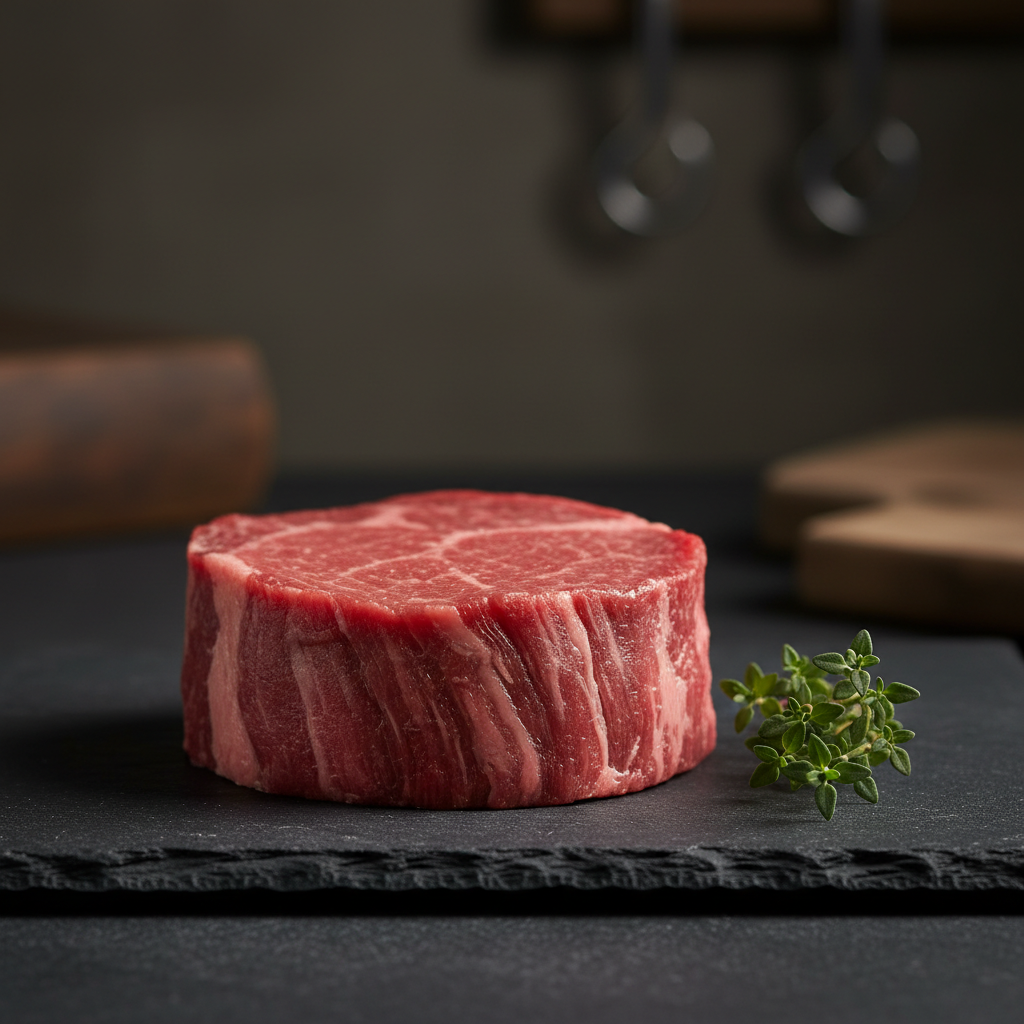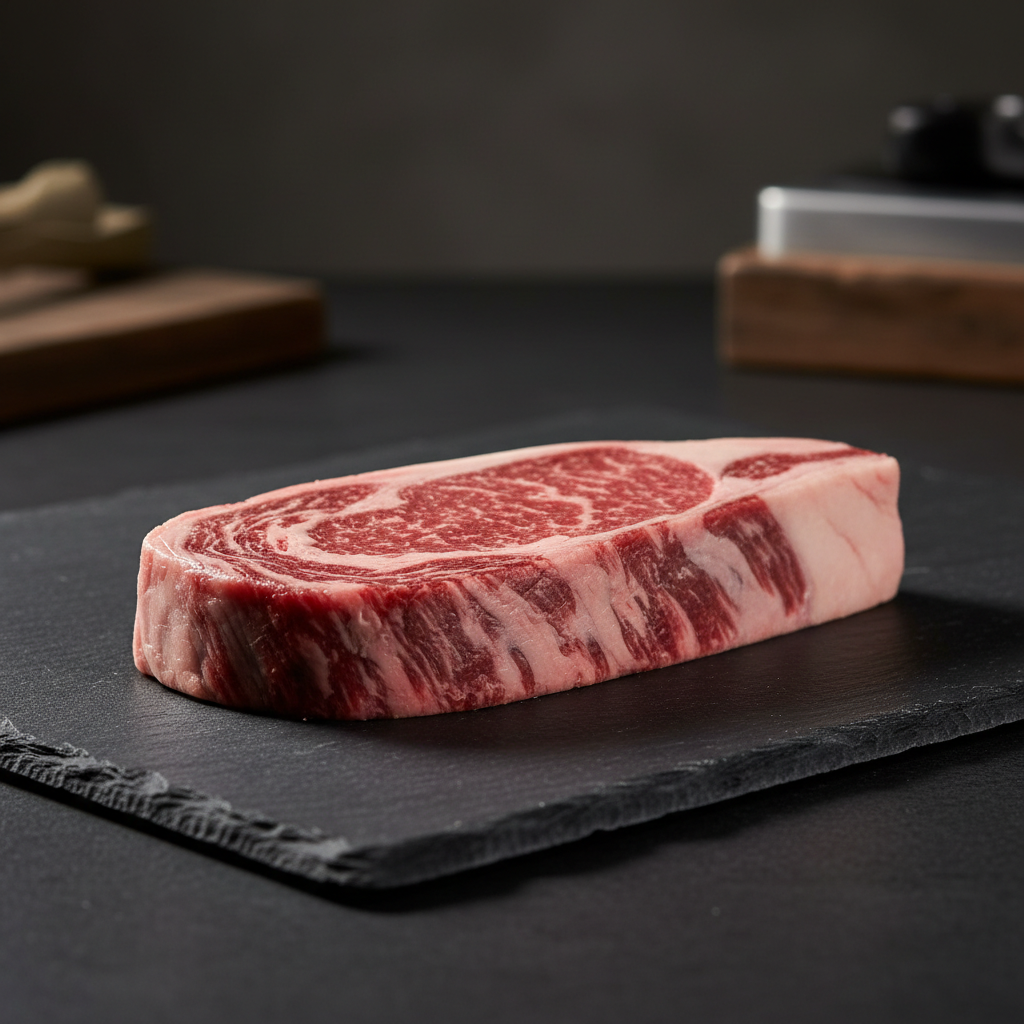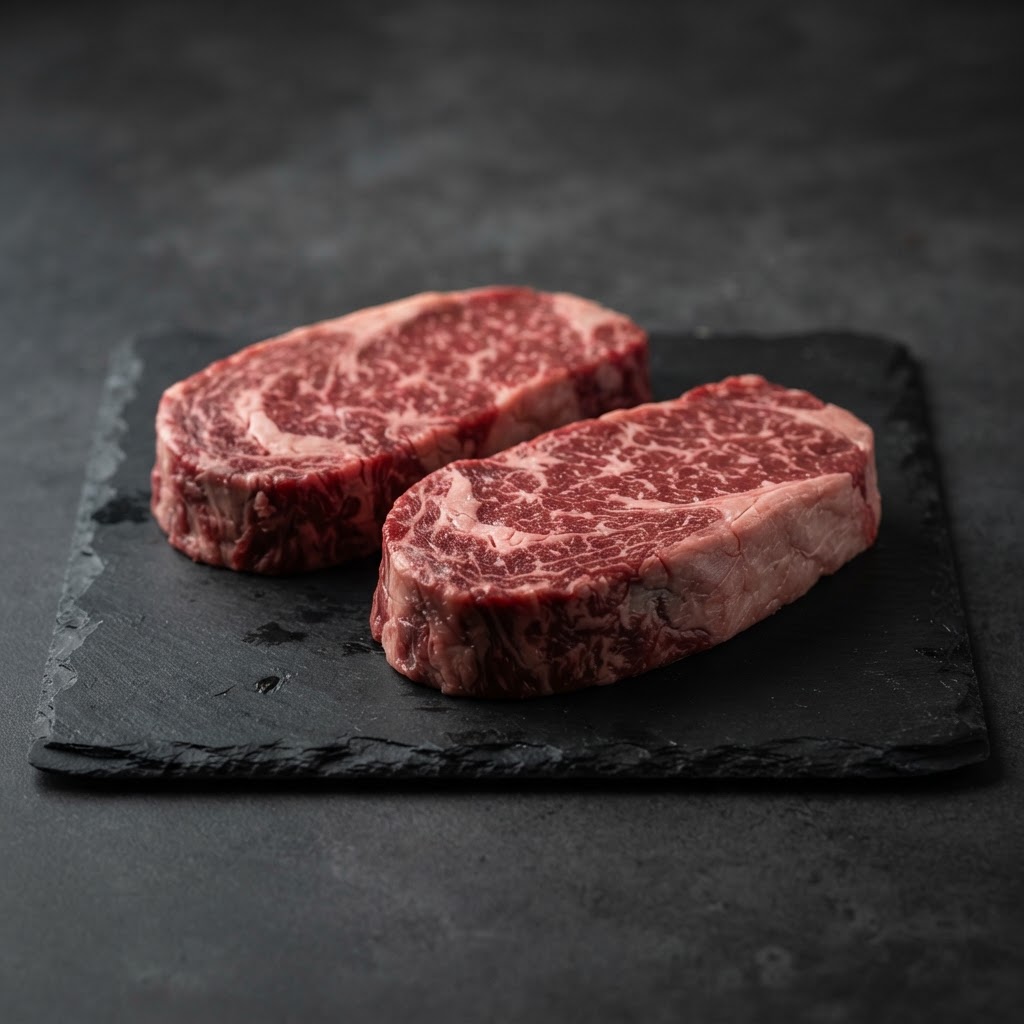
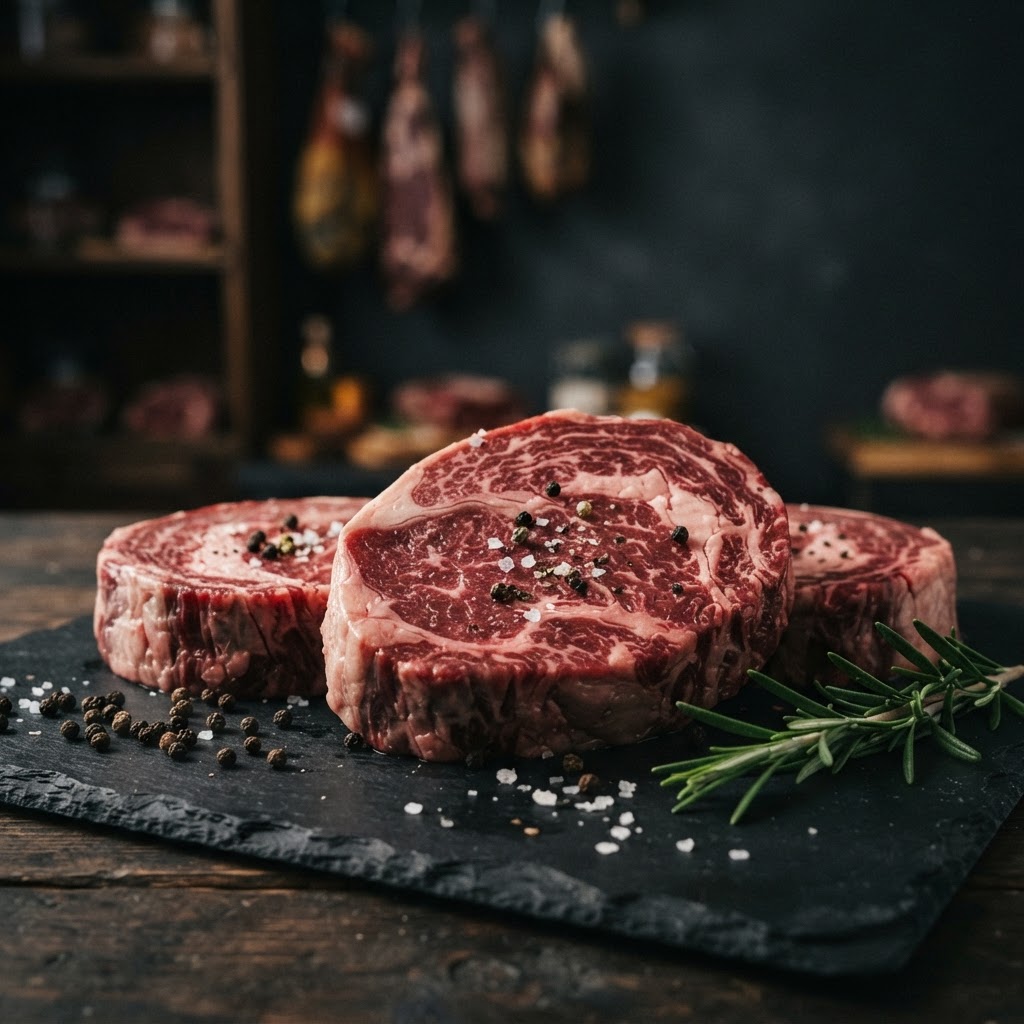
A well-cooked ribeye is one of the simplest treats you can make at home, and the fat marbling does most of the work for you. Here is the method our butchers recommend.
Before You Start
- Take the steak out of the fridge about 20 to 30 minutes before cooking so it is not fridge cold in the middle.
- Pat it dry with kitchen paper, then season generously with salt and pepper just before it goes in the pan.
- Use a heavy pan: cast iron holds its heat and gives you a better sear.
Pan Cooking, Step by Step
Get the pan properly hot, add a little oil with a high smoke point, and lay the steak in away from you. For a ribeye around 2cm thick:
- Sear for 2 to 3 minutes without moving it, until a deep crust forms.
- Flip once and cook for another 2 to 3 minutes for medium rare.
- Optional: for the last minute, add a knob of butter, a crushed garlic clove and a sprig of thyme and baste the steak.
- Rest the steak for at least 5 minutes before serving.
Doneness Guide
| Doneness | Approx internal temperature |
|---|---|
| Rare | 50 to 52°C |
| Medium rare | 54 to 57°C |
| Medium | 60 to 63°C |
| Medium well | 65 to 68°C |
| Well done | 70°C and above |
A digital probe takes the guesswork out: insert it into the thickest part of the steak, away from fat. Without one, press the steak with your finger: rare feels soft, well done feels firm.
Cooking Ribeye on the BBQ
Grill over direct, high heat for the same timings, turning once. Move the steak to a cooler part of the grill if the fat catches and flames up, and rest it just the same.
Why Resting Matters
Resting lets the juices that were driven to the surface by the heat redistribute through the meat. Cut too early and they end up on the board instead of in the steak.
Our ribeye steaks are cut in the shop, and you will find sirloin, fillet and T-bone in the steak counter too. Add one of our steak sauces on the side, or order for delivery or collection.